


You don’t need more willpower to be productive; you need better flow. When your day is designed to match how your brain and body actually work, getting things done feels less like a grind and more like a steady rhythm you can trust.
Lifestyle optimisers know this: the win isn’t just ticking more boxes, it’s moving through the day with clarity, energy, and calm focus. That comes from two places working together: how you start your day, and how you structure your work.
First, you’ll build a morning flow that wakes up your brain, not just your inbox—using light movement, hydration, and low-stimulation rituals to prime focus and decision-making. Then, you’ll plug that energy into smart task structures like focus sprints and the 1-3-5 rule, so your effort compacts into meaningful progress instead of scattered busyness.
By the end, you’ll have a simple, science-backed blueprint you can customize to your own rhythms and use to improve your daily flow for greater productivity—without burning out your future self.
Morning Rituals That Prime Your Daily Flow and Lift Productivity

A calm, simple morning ritual is the hinge that swings your whole day toward focus. Begin with small, repeatable acts that exploit biological advantages: early willpower, overnight toxin clearance, and hormonal windows that favor decision-making and creativity. The aim is not heroics before sunrise but consistent cues that tell your nervous system you are entering work mode.
First, hydrate immediately. Drinking a glass of water on waking restores circulation and supports cognition before hunger or full alertness arrives. Next, move briefly. Sixty to ninety seconds of isometric tension or light stretching increases blood flow to the brain, teaches calm under pressure, and releases neurotransmitters that sharpen attention. These short moves are enough to signal your body and mind; they do not require a gym.
Sequence matters. Reserve your highest-impact task for the first deep focus window. Tackle one demanding task, then follow with three moderate tasks and a handful of small wins if you use the 1-3-5 approach. This structure protects willpower and ensures meaningful progress without catapulting you into overload. By putting cognitive load early, you convert the brain’s cleanest hours into real output.
Pace work with short focus sprints and micro-resets. Work for a concentrated block, then pause two to five minutes for a reset. Stand up, breathe deeply, sip water, or step into natural light. These tiny breaks restore oxygen and attention, preventing the afternoon drag. Over time, they increase sustained flow across a full day.
Remove friction the night before. Lay out clothes, prepare simple breakfasts, and set a clear top task on your list. These small preps reduce decision fatigue and make the morning ritual stick. Consistency matters more than perfection; repeating a short, realistic routine builds momentum and protects dopamine from squandered choices.
Integrate gentle anchors like a post-lunch walk or a mid-afternoon stretch. Anchors keep rhythm steady and help the nervous system pivot between deep work and recovery. Track adherence with a simple checklist. A short record reinforces habit loops and gives gentle accountability without adding stress.
Rituals are not scripts; they are scaffolding. Adjust timing to your natural wakefulness. Some people thrive at six, others at eight. What matters is the repeatable pattern: hydrate, move, focus, reset, and prepare. Over weeks this pattern amplifies productivity and steadies attention for 12 to 16 hours.
Over months, small wins compound. Keep a weekly review to note which rituals boost focus. Swap one ritual at a time to test cause and effect. Use natural light and modest caffeine only after your first focus window to avoid cortisol spikes and jitter. Prioritize sleep hygiene so morning rituals land reliably. When rituals become automatic, they free cognitive space for creative problem solving and sustained deep work. Start small, stay steady.
If you want practical next steps, read the short guide on empowering individuals for professional growth for methods that align with these rituals.
External reference: https://anthonysanni.com/blog/law-morning-unusual-science-based-facts-morning-special-productivity
Designing Daily Task Structures That Sustain Flow and Drive Results
Designing Daily Task Structures That Sustain Flow and Drive Results
A focused task structure reduces friction and makes each workday more predictable. By limiting choice and setting clear boundaries for effort, you free mental space for concentration and momentum. Start by choosing one Most Important Task each morning. Make it concrete, tied to a larger goal, and scheduled early when decision fatigue is low. Completing that task first produces visible progress and signals the brain to reward sustained effort.
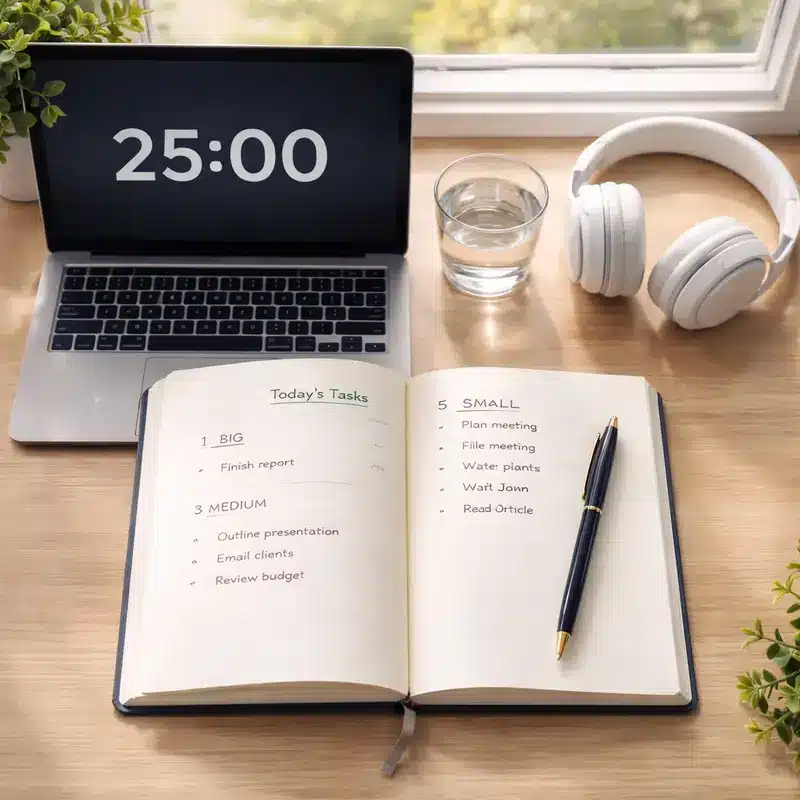
Complement a single big focus with a practical capacity cap. The 1-3-5 rule is a simple template: one big, three medium, and five small tasks. It limits your daily load while honoring complexity. Use it as a planning scaffold: list everything, match items to time windows, and trim until it fits the nine-slot structure. This prevents frantic multitasking and protects deep work windows from being eaten by low-value chores.
For longer projects, the 3-3-3 approach helps. Reserve three hours for deep work on your top project. Afterwards, handle three urgent or context-sensitive tasks, then finish with three maintenance items such as messages or routine reviews. This rhythm balances creative stretches with necessary administration, so your focus isn’t constantly interrupted.
End-of-day rituals feed tomorrow’s clarity and flow. Try the Ivy Lee method: write six tasks for tomorrow and tackle them in order. Or apply a prioritization matrix that separates Must from Should and Could. Both force decisive choices and reduce morning anxiety about what to start.
Time-blocking ties these methods together. Assign calendar slots to each category of work and protect them like appointments. Batch similar tasks to reduce context switching. Break large tasks into 2–3 actionable steps and never have more than a couple of items in progress. This keeps momentum steady and prevents the fragmentation that kills flow.
Small, repeatable rituals sharpen execution. Spend five minutes before work to choose your top priorities and silence unnecessary notifications. Use focused sprints of concentrated work followed by micro-resets: a brief stretch, water, or a few deep breaths. Those resets restore circulation and clarity without derailing momentum.
Combine structure with flexibility. If a day derails, move unfinished items to the next priority list instead of scattering them across the week. Track completion with short reviews and adjust the next day’s plan for realistic capacity. Over time, these patterns train the mind to expect deep, undisturbed work and consistent progress.
For practical guidance on setting priorities and choosing the right method for your role, see a concise external resource here: https://asana.com/resources/how-prioritize-tasks-work. For more on adapting structure to workplace dynamics, explore strategies for navigating success in the modern workplace.
Final thoughts
Daily flow isn’t a personality trait; it’s a design choice. When you warm up your brain with light movement, hydration, and a low-stimulation morning, you start the day in control instead of reacting. When you then channel that readiness into focus sprints, micro-resets, and a 1-3-5 task structure, your work stops feeling chaotic and starts feeling deliberate.
For a lifestyle optimiser, the goal isn’t to fill every minute—it’s to align your energy, attention, and actions so progress feels sustainable. Start by upgrading just one part of your flow: a 10-minute pre-work movement block, a single deep-work window, or a simple 1-3-5 list for tomorrow. Then iterate.
Design your days like a system you’ll live with for years, not a sprint you’ll abandon next week. Improve your daily flow for greater productivity, and you don’t just get more done—you get to feel better while doing it.