
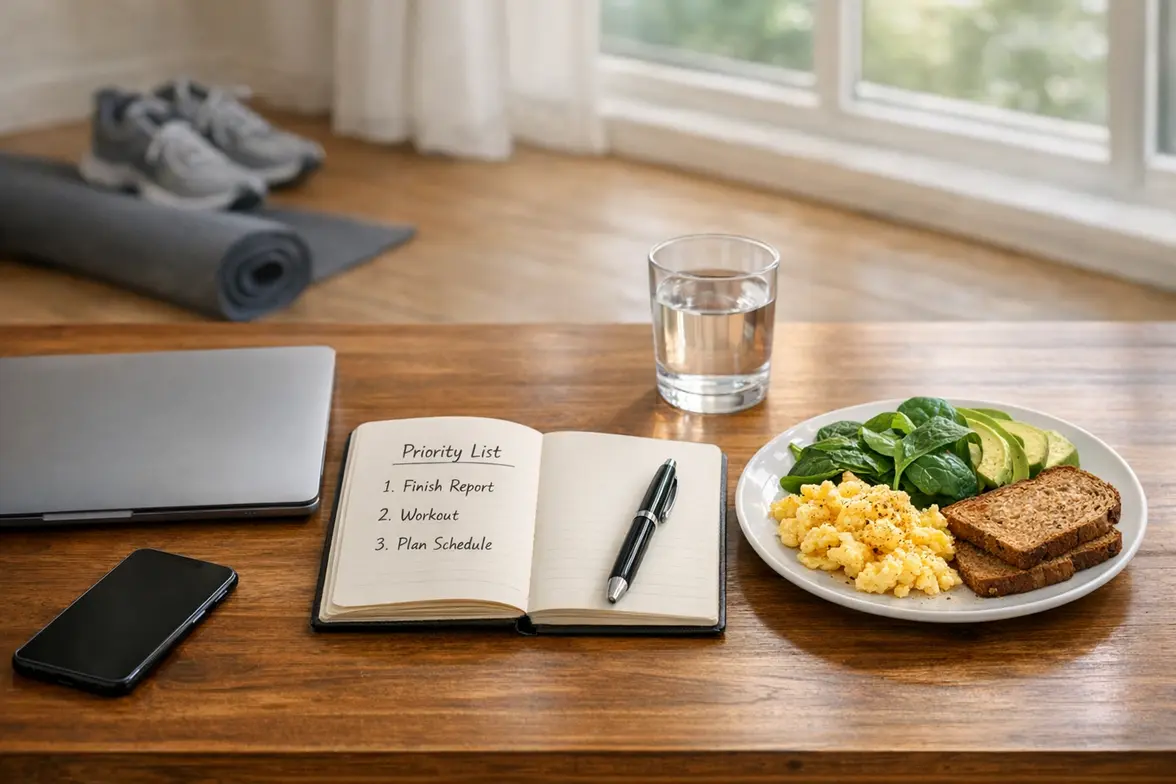

High performance isn’t about squeezing more into your calendar. It’s about designing your days so your energy, focus, and creativity stay sharp without burning you out. Lifestyle optimisers know that small, consistent habits compound into big results.
Daily high performance habits work like a personal operating system. The right inputs—calm focus, quality sleep, intelligent movement, clean organisation, and steady fuel—produce better outputs: clearer thinking, more strategic decisions, and sustainable productivity.
We’ll start with breath work and mindset prep to show how your morning attention sets the tone for everything that follows. Then we’ll look at sleep and movement as the non‑negotiable pillars that keep your brain and body running at a high level. Finally, we’ll connect organisation and structured meals to real-world execution, so your environment and energy support your ambitions instead of silently sabotaging them.
Mind-First Routines: Breathwork and Mental Prep for Daily High Performance

Mind-first routines build a reliable foundation for daily high performance by prioritizing mental rehearsal and nervous system regulation. Making breathwork and mindset prep non-negotiable gives your brain a clear cue to shift into focused mode. When these practices become scheduled habits, they reduce start-up friction and preserve willpower for meaningful work.
Start by treating short breathwork sessions like physical warm-ups. Two to five minutes of slow, diaphragmatic breathing calms the sympathetic nervous system. This creates physiological space for clear thought and steady emotion. Breath techniques need not be complex. A consistent pattern trains your body to move from reactivity to calm under pressure. Over weeks, your baseline stress response drops and focus tightens.
Pair breathing with simple visualization and self-talk. Visualize the steps that lead to successful execution rather than only the outcome. Mental rehearsal builds neural pathways that mirror physical practice. Customized affirmations then reinforce confidence and redirect doubt. Keep scripts concise and in present tense. Repeating them during breath cycles anchors them in the body, so they surface automatically when challenges arrive.
Combine these elements into a compact pre-performance ritual. Use the same sequence each morning: hydrate, breathe, visualize one priority, then state a short affirmation. Repetition turns effortful actions into automatic cues. That preserves decision-making bandwidth for the day’s real work and reduces cognitive clutter.
Integrating mental prep also means respecting timing. Schedule practices at consistent moments, not when energy is low. Short sessions before meetings, creative work, or workouts are effective. Over time, this approach shifts the aim from pushing harder physically to trusting your trained abilities mentally. It supports resilience during long stretches of output and sharpens strategic thinking in key moments.
For practical tools to streamline your day and protect mental bandwidth, explore ways to improve daily flow and boost productivity. External reference on structuring psychological preparation: https://www.thestrad.com/playing-hub/the-final-21-days-structuring-psychological-preparation-before-high-stakes-performance/20966.article
Sleep and Daily Movement: The Non-Negotiable Pillars of High Performance

Sleep and movement form the biological foundation for sustained high performance. When your sleep schedule is regular, your circadian rhythm settles. That rhythm yields predictable energy windows and sharper concentration. Many people notice changes within days. Falling naturally to sleep at the same hour becomes easier. Consistent sleep supports emotional regulation, clearer thinking, and stronger decision-making. Treating bedtime as non-negotiable protects mental bandwidth and long-term output.
Movement complements sleep by keeping physiology tuned. Rather than occasional intense workouts, high performers choose short, daily activity. A 20–30 minute walk, run, or home routine raises mood, sharpens memory, and increases creative problem-solving. The effects compound: small daily actions produce steady gains in energy and resilience. When movement and sleep align, they create a synergy. Better sleep improves exercise recovery. Regular exercise deepens sleep quality. Together, they sustain focus across long stretches of work.
Daily habits win because the body adapts to rhythm and repetition. Big resolutions flare and fade. Daily consistency rewires energy systems slowly and sustainably. That steady approach reduces burnout. It preserves clarity for complex tasks and protects the cognitive resources leaders need. Invested self-care pays off in higher-quality decisions and more reliable creativity.
Practical choices make these pillars deliver. Fix a bedtime and wake time, even on weekends. Stack short movement sessions around work breaks. Begin mornings with hydration and gentle movement to reinforce wake signals. Keep sessions simple so they are repeatable. Prioritize sleep when scheduling deadlines. When you treat rest and movement as core work inputs, productivity becomes more sustainable.
For routines that enhance flow and time use, explore ways to improve daily flow and boost productivity. For the research grounding these ideas, see this summary of early-day habits that keep high achievers energized and healthy: https://vocal.media/motivation/the-early-day-habits-that-keep-high-achievers-energized-and-healthy
Clear Space, Stable Fuel: How Organized Routines and Structured Meals Power Daily Performance

Order and fuel are twin levers for high performance. Clearing physical and mental clutter reduces small daily frictions. A tidy desk, a calendared day, and a short list of priorities cut the wasted minutes that add up to lost hours. That same elimination of friction applies to food: preplanned meals remove repetitive choices and protect your cognitive bandwidth.
When meals are structured, blood sugar stays steady and attention remains sharp. High performers favor lean protein, vegetables, healthy fats, whole grains, and nutrient-dense greens because these combinations prevent energy spikes and crashes. Portable, high-protein, low-carb options—meals delivering roughly 25–30 grams of protein with modest net carbs—can sustain focus for four to six hours. The result is fewer decision errors and less midafternoon slump.
Treat eating like an investment in output. Approaches such as intermittent fasting or a Mediterranean-style pattern are tools to stabilize metabolism and simplify choices, not rules for weight alone. Meal planning converts willpower into routine. A weekly plan, batch-cooked proteins, and simple greens-based lunches mean no queueing, no impulsive carbs, and no energy tax from regret after eating.
At a team level, replacing unstructured lunch time with efficient, nourishing options reclaims productivity. Organizations that shift to lighter, digestion-friendly business meals report less downtime and faster return to focused work. For individuals, practical habits include a protein-forward breakfast, a prepared mid-day plate with vegetables and healthy fats, and avoiding heavy breads before important meetings.
Combine minimalism and meal design: declutter your workspace the night before, then reach for a prepacked, high-protein lunch. This pair reduces decision fatigue and sustains mental stamina across long stretches of deep work. Over weeks, those compounding minutes amplify creativity, sharpen decisions, and protect against burnout. If you want pragmatic steps to implement these systems, see guidance on improving daily flow and boosting productivity: Improve Daily Flow and Boost Productivity
Final thoughts
High performance is less about heroic effort and more about reliable systems. When you start your day with deliberate breath work and mindset prep, you protect your mental bandwidth instead of donating it to notifications. When you honour sleep and movement as non‑negotiables, you give your brain and body the raw capacity to perform. When you organise your environment and fuel yourself with structured, high‑protein meals, you translate that capacity into consistent output.
For lifestyle optimisers, the opportunity is clear: build a small stack of daily high performance habits and treat them like scheduled meetings with your future self. Start with one upgrade in each area—five minutes of breathing, a fixed bedtime, a 20‑minute walk, a clutter-free desk, a real lunch—and let consistency do the heavy lifting. Success and productivity then become side effects of how you live every day, not random spikes of motivation.